St John Ambulance
Unit Buddy Pilot Case Study
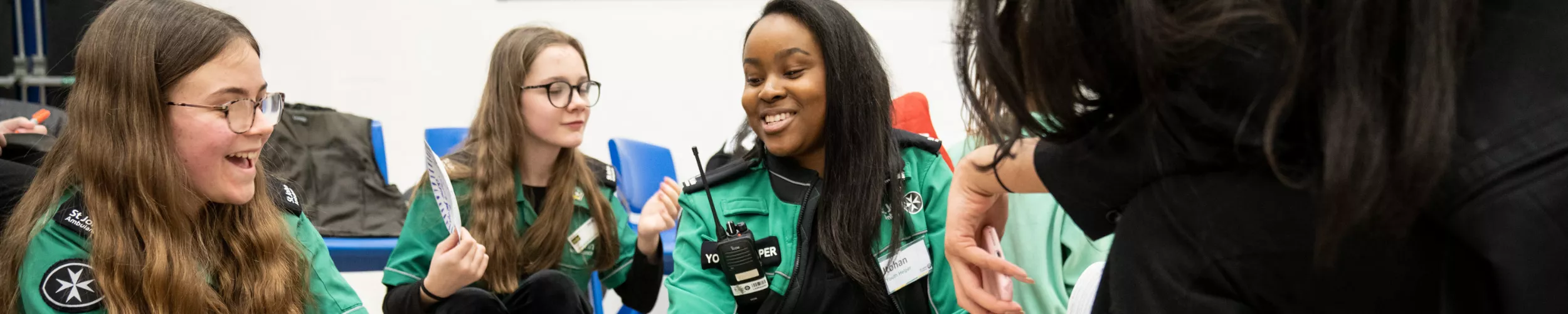
As part of the Uniformed Youth Fund project (2023–2025), St John Ambulance piloted the Unit Buddy initiative, a peer-support programme designed to strengthen engagement, leadership, and communication within Cadet units. The initiative focuses on empowering experienced Cadets to support new or developing units, while also improving volunteer confidence and retention.
The pilot was delivered across three locations, Greater Manchester, Hull, and Royal Tunbridge Wells, bringing together three Unit Buddies, six adult volunteers, and multiple Cadet units. Supported by UYF funding, the programme aimed to create a more connected and resilient Cadet network by offering tailored, practical support at unit level.
Each Unit Buddy was an experienced Cadet, trained and supported to provide guidance, reassurance, and practical advice to volunteers and Cadets within an assisted unit. Over a three-week period in February 2025, Unit Buddies attended between one and three sessions at their matched units, supported by clear guidance, risk assessments, and safeguarding processes. Communication was primarily facilitated through Microsoft Teams, enabling ongoing support between visits.
The impact of the pilot was strongly positive. Feedback from Unit Buddies highlighted increased confidence in both themselves and the volunteers they supported. New volunteers particularly valued having someone approachable to answer questions about duties, events, and unit processes. The initiative also helped strengthen relationships between units, encouraged the sharing of best practice, and supported smoother integration for new volunteers.
The pilot demonstrated additional benefits for the Unit Buddies themselves. Cadets developed leadership, communication, problem-solving, and confidence, while gaining experience in mentoring and representing Cadet voice. Many reported feeling proud to contribute to the wider organisation and expressed a desire to continue in the role.
Key learning from the pilot identified the importance of clear role definition, strong communication with Unit Managers, and ongoing peer support for Unit Buddies. Minor adjustments were recommended, including enhanced training resources, clearer guidance on boundaries, and the creation of a Unit Buddy peer network to support sustainability.
Overall, the Unit Buddy pilot has shown strong potential as a scalable and sustainable model for volunteer and Cadet support. With refinements, it offers a valuable way to strengthen local units, empower young leaders, and ensure a welcoming, well-supported environment for volunteers, directly contributing to the long-term success of St John’s Cadet programme.
WHO WE WORK WITH